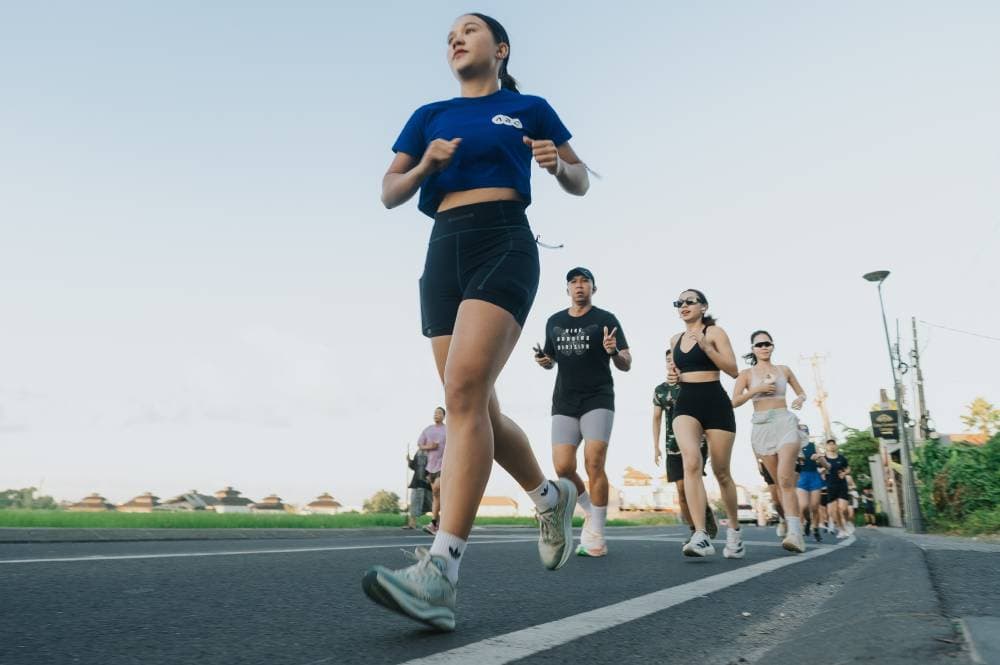
Head out along Batu Bolong or Berawa early on a weekday morning and you’ll see them: groups of twenty, thirty, sometimes fifty people running together, most of them finishing at a cafe. A few years ago this wasn’t a thing in Canggu. Now it’s one of the fastest-growing parts of the town’s fitness scene.
Why Run Clubs Took Off in Canggu
The running club boom isn’t unique to Bali. It’s happened in cities all over the world in the past few years. But Canggu had a few conditions that made the trend land harder here than most places.
The town is built for a specific kind of run. Canggu has rice field paths, quiet backroads, and a beach route that most cities would kill for. You get scenery, flat terrain, and a genuine reason to want to be outside at 6am rather than treating it as a chore.
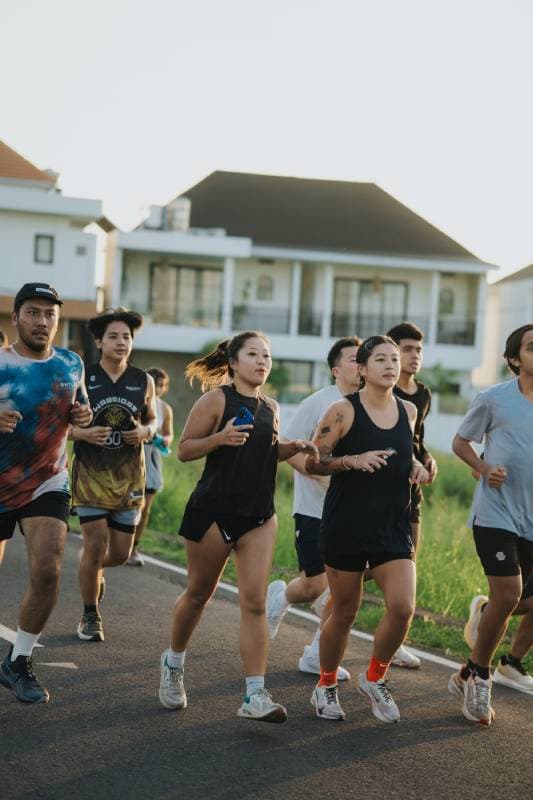
The population is transient, and people want a way in. A lot of people in Canggu are new here. They arrived a week ago, or a month ago, and they don’t know anybody yet. A run club solves that faster than almost anything else. You show up, you run, you get coffee, and suddenly you know fifteen people. That’s a much lower barrier than trying to make friends at a gym where everyone has headphones in.
It’s free or close to it. Most run clubs cost nothing to join. In a town where a lot of fitness options carry a real price tag, that accessibility matters, especially for people still figuring out how long they’re staying.
The social format fits the culture here. Canggu has never been a place where people train in isolation. Surfing is social. Yoga is social. Running clubs slot neatly into that same pattern: a workout that doubles as a way to meet people, with a built-in reason to hang around afterward.
Running got cool again. There’s been a broader cultural shift around running over the past few years, driven partly by social media, partly by a move away from gym-only fitness. Running stopped being the thing you did because you had to and started being a thing people actually organize their week around.
What Actually Happens at a Run Club
If you’ve never joined one, the format is usually simpler than people expect.
Most clubs meet at a fixed spot at a fixed time, usually early morning to beat the heat. There’s a short warm-up and a quick briefing on the route. Then the group runs, typically splitting into pace groups so faster and slower runners aren’t stuck trying to match each other. Distances are usually somewhere between 5km and 10km, though this varies.
The part that actually keeps people coming back tends to be what happens after. Most clubs finish at a cafe, and the post-run coffee is very much part of the point. This is where the community piece happens, and it’s the reason run clubs work as a social entry point in a way that a solo morning jog never will.
You don’t need to be fast. You don’t need to have run before. Most clubs actively structure their pace groups so that beginners aren’t left behind, and showing up as a complete beginner is normal rather than unusual.
ARC: Avenue Running Club
We started ARC (Avenue Running Club) in 2025, and the reasoning was straightforward. Our members were already running. Canggu’s run club scene was already growing. What was missing, for us, was a club connected to a gym, where the running side and the strength side of training actually talk to each other.
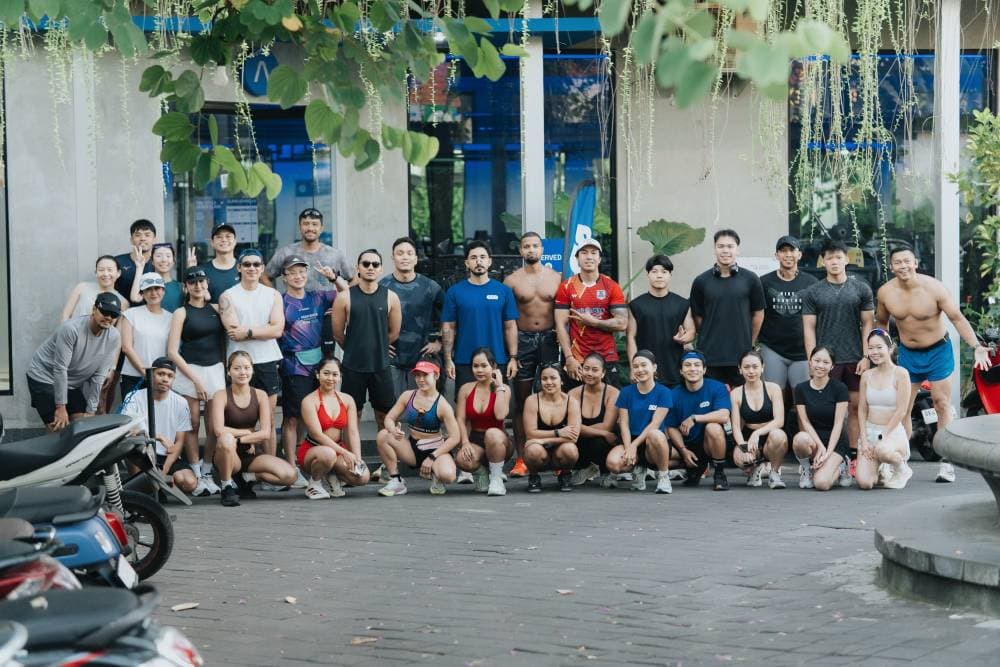
That connection matters more than it sounds. Runners who never lift tend to run into the same problems: weak glutes, tight hips, nagging knee issues, and a ceiling on how far they can progress before something starts hurting. Runners who also train strength don’t hit those walls as quickly. Having a run club attached to a full gym means the people who want to address that have somewhere obvious to go.
ARC is open to all levels. Fast runners, slow runners, people who haven’t run since school. The point isn’t pace. It’s showing up consistently with people who will notice if you don’t.
You can find upcoming ARC runs and other community sessions on our events page.
How Running Fits With the Rest of Your Training
Running on its own is great cardio, but it’s an incomplete training program. If you’re running multiple times a week, a few things are worth pairing with it.
Lower body strength work. Squats, leg press, and hip-focused movements build the strength that protects your knees and hips over higher mileage. This is the single highest-value addition for most runners.
Posterior chain training. Hamstrings and glutes do a huge amount of work during running, and they’re also the muscles most likely to be underdeveloped in people who sit at a desk between runs.
Something that isn’t running. Cross-training gives your joints a break while keeping your cardiovascular base intact. Boxing and Muay Thai classes work well here, since both build serious conditioning without the repetitive impact of more road miles.
Actual rest. Running every day in Bali’s heat and humidity is a fast route to burnout. Two to four quality runs a week with proper recovery will beat six mediocre ones.
Finding the Right Run Club for You
Canggu has several running clubs now, and they’re not all the same. A few things worth checking before you commit to one:
Pace groups. Does the club split by pace, or does everyone run together? If you’re a beginner, a club without pace groups can be discouraging.
Meeting time and location. The most important factor for actually showing up is convenience. A club that meets fifteen minutes from where you live at a time that works with your schedule will beat a better club that doesn’t.
Distance and format. Some clubs do steady social runs. Others do intervals and structured training. Neither is better, but they attract different people and it’s worth knowing which you’re joining.
Whether it fits your wider training. If you’re also lifting, a club connected to a gym removes a lot of logistical friction.
Getting Started
If you’ve been meaning to start running in Canggu, the run club format removes most of the reasons people don’t. You don’t have to plan a route, you don’t have to motivate yourself alone at 6am, and you don’t have to know anyone before you show up.
ARC runs are listed on our events page, alongside the rest of our community sessions. You can also check the class schedule for the strength and conditioning sessions that pair well with a running routine, or look at membership options if you want access to the gym side as well.
Show up once. That’s usually all it takes.