Key Takeaways
- Kettlebell training uniquely combines ballistic power with traditional strength, enhancing athleticism.
- Master the Kettlebell Swing’s hip-hinge mechanics for core activation and injury prevention.
- Incorporate compound kettlebell exercises to achieve an efficient full body workout.
- Prioritize proper form and professional guidance to maximize results and avoid common pitfalls.
Forget tedious machine routines; the future of functional fitness, as of Rabu, 25 Februari 2026, increasingly champions tools that demand dynamic engagement and integrate multiple muscle groups. This is precisely where kettlebell workouts shine. More than just weights, kettlebells are potent instruments for developing explosive power, functional strength training, and achieving a comprehensive full body workout. Their unique design shifts the center of gravity, forcing stabilizer muscles into action and creating a training stimulus unparalleled by conventional dumbbells or barbells.
The Unmatched Advantage of Kettlebells in Strength Training
Unlike fixed-path machines or even dumbbells, the kettlebell’s offset center of mass requires constant stabilization, engaging your core and smaller synergistic muscles throughout every movement. This unique characteristic makes kettlebell workouts incredibly effective for building real-world strength that translates directly into improved athletic performance and daily activities. From enhancing grip strength to developing powerful hips, kettlebells offer a holistic approach to physical development.
The ballistic nature of many kettlebell exercises, such as swings and snatches, bridges the gap between traditional strength and power training. This dual benefit not only builds muscle and burns fat but also significantly improves cardiovascular health and muscular endurance, making them an ideal tool for comprehensive fitness regimens.
Decoding the Kettlebell Swing: The Foundation of Explosive Power
The Kettlebell Swing is arguably the most fundamental and powerful kettlebell exercise, serving as the cornerstone for developing explosive hip drive and full-body coordination. Our functional fitness specialists emphasize that mastering this movement is paramount for safety and maximizing results across all kettlebell workouts.
Key Mechanics of a Perfect Kettlebell Swing:
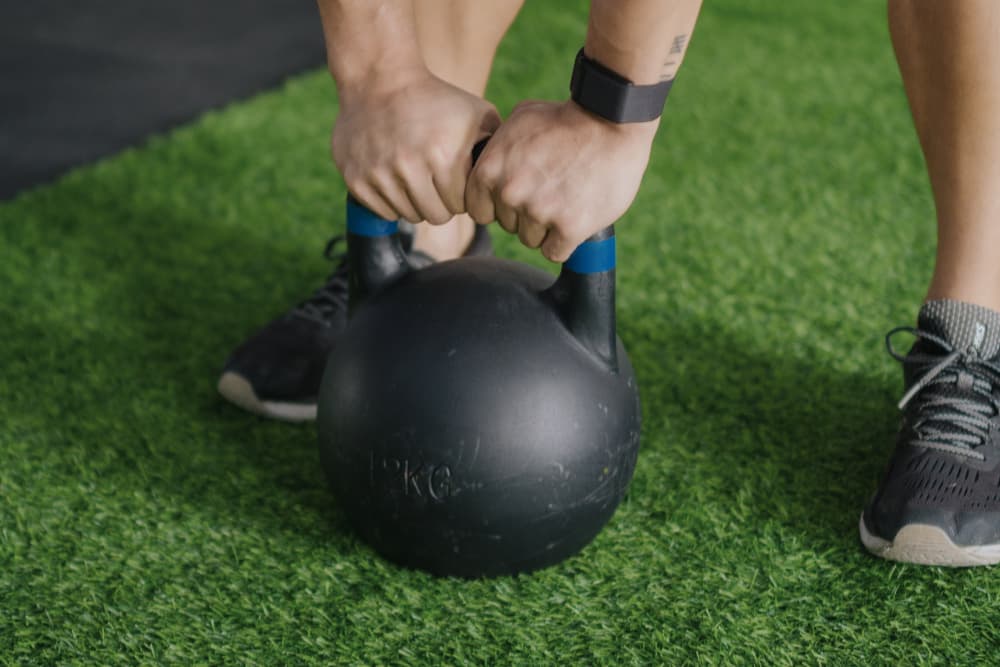
- The Hike Pass (Start): Stand with feet shoulder-width apart, kettlebell slightly in front. Hinge at the hips, keeping your back flat and chest up. Grab the kettlebell with both hands, pulling it back between your legs like hiking a football. This initial “hike” creates momentum.
- The Hip Hinge: This is NOT a squat. Your knees bend slightly, but the primary movement comes from pushing your hips back. Feel the stretch in your hamstrings. Maintain a neutral spine; do not round your back.
- The Explosion: Forcefully snap your hips forward, squeezing your glutes. This hip drive generates the power that propels the kettlebell upwards. Your arms merely guide the bell; they do not lift it.
- The Float: At the top of the swing, the kettlebell should float briefly to chest or eye level. Your body should be in a strong, standing plank position—glutes squeezed, abs braced, shoulders packed down.
- The Descent: Allow gravity to pull the kettlebell back down. As it descends, hinge at your hips again, absorbing the force and guiding the bell back through your legs for the next repetition. Maintain control throughout the entire movement.
The Kettlebell Swing teaches the body to generate power from the hips, a critical athletic movement often underdeveloped. Precision in form prevents lower back strain and amplifies muscular engagement.
Common mistakes include squatting too much, lifting with the arms, or hyperextending the back at the top. Consistent practice with a focus on technique will yield significant improvements in power, core strength, and overall athleticism.
Top 5 Advanced Kettlebell Exercises for a 30-Minute Full Body Workout
Once you’ve mastered the foundational swing, integrate these advanced kettlebell exercises into your routine for a challenging yet efficient full body workout. This list focuses on compound movements that recruit multiple muscle groups, perfect for maximizing your training in a compact 30-minute session.
- Kettlebell Clean & Press: This dynamic duo combines a powerful pull (the clean) with an overhead push (the press). It builds explosive power, shoulder strength, and core stability. It’s a true test of coordination and full-body integration.
- Kettlebell Snatch: The ultimate ballistic kettlebell movement, the snatch takes the bell from the floor to an overhead lockout in one fluid motion. It demands immense power, mobility, and shoulder stability, offering unparalleled conditioning benefits.
- Double Kettlebell Front Squat: Holding two kettlebells in the rack position (at your shoulders) significantly challenges your core strength and upper back, making this squat variation a phenomenal lower body and core builder that far exceeds traditional barbell squats for functional stability.
- Kettlebell Turkish Get-Up: More than just an exercise, the Turkish Get-Up is a moving plank. It’s a slow, controlled movement that takes you from lying on your back to standing, all while holding a kettlebell overhead. It’s incredible for shoulder stability, core strength, and movement pattern integration.
- Kettlebell Renegade Row: Performed from a plank position with hands on two kettlebells, this exercise combines a plank (core stability) with a single-arm row (back strength). It challenges your anti-rotational core strength significantly.
Structure your 30-minute session by performing 3-4 sets of 5-8 repetitions for the Clean & Press, Snatch, and Double Front Squat. For the Turkish Get-Up, aim for 1-3 repetitions per side. For Renegade Rows, target 8-12 repetitions per arm. Rest adequately between sets (60-90 seconds) to maintain power output.
Maximizing Results and Preventing Injury in Your Kettlebell Workouts
While the benefits of incorporating kettlebell workouts into your regimen are undeniable, the complex mechanics of many kettlebell exercises mean that proper form is not just a recommendation—it’s a necessity. Incorrect technique can lead to inefficiencies, limit your progress, and, critically, result in injuries that derail your fitness journey.
The unique trajectory and weight distribution of kettlebells demand precise body mechanics, especially for ballistic movements like swings and snatches. Without an understanding of the subtle nuances, many individuals inadvertently recruit the wrong muscles, placing undue stress on their lower back, shoulders, or knees.
Kettlebells require precise technique for safety and results. If you’re self-teaching, you’re risking injury. Join our guided strength classes or work with a personal trainer to master this explosive tool in a fully equipped environment.
Investing in professional guidance ensures you develop strong, safe movement patterns from the outset. Our functional fitness specialists are equipped to provide personalized coaching, offering real-time feedback and adjustments that accelerate your learning curve and safeguard your body. Don’t compromise your potential or your health; train smart, train effectively.
Frequently Asked Questions (FAQ)
What kettlebell weight should a beginner start with?
For men, a common starting weight is 16 kg (35 lbs), and for women, 8 kg (18 lbs). However, this can vary based on individual fitness levels and prior experience with strength training. It’s always better to start lighter to perfect your form.
How often should I do kettlebell workouts?
For optimal results and recovery, aim for 2-4 kettlebell workouts per week, allowing for rest days in between. Ensure your program provides a balanced full body workout, targeting different muscle groups across sessions.
Can kettlebells replace all other forms of strength training?
While kettlebells are incredibly versatile and effective for strength training and conditioning, they excel particularly in ballistic and compound movements. For highly specific strength goals, such as maximal powerlifting or bodybuilding, they might be complemented by barbells and dumbbells, but they are more than sufficient for general fitness and athletic development.
Are kettlebells good for weight loss?
Absolutely. The dynamic, full-body nature of many kettlebell exercises leads to high calorie expenditure. Combining strength building with cardiovascular elements, kettlebell workouts are highly effective for fat loss and improving body composition when paired with a healthy diet.
What is the difference between a kettlebell swing and a squat?
A kettlebell swing is primarily a hip-hinge movement, focusing on explosive hip extension and glute activation. While knees bend, the emphasis is on pushing the hips back. A squat, on the other hand, is a knee-dominant movement where the hips and knees bend simultaneously, with the hips typically descending below knee level, focusing more on quadriceps and glute strength.