Mobility exercises are one of the fastest ways for lifters to improve squat depth, move with better control, and reduce the feeling of stiff hips during training. If your squat exercise feels blocked at the bottom, your heels pop up, or your hips pinch when you descend, the problem is often not just strength. It is usually a mix of hip mobility, ankle mobility, positioning, and control.
For gym enthusiasts, that matters because a deeper squat is not only about looking better in the gym. Better movement quality can help you train with more consistency, target the right muscles, and keep your hips, knees, and lower back feeling better over time. The goal is not to force yourself into extreme ranges. The goal is to earn usable range of motion that supports strong lifting.
Why Mobility Exercises Matter for Lifters
Mobility exercises matter because they help you actively control range of motion, not just passively reach it. For lifters, that difference is huge. You do not just need to touch a position. You need to own it under load.
Tight or underused hips can change how you squat, hinge, lunge, and even walk. Authoritative orthopedic guidance also notes that tight hips can increase stress on nearby areas like the lower back and knees. That is one reason lifters who sit for long periods often feel great during upper-body training but struggle to sit comfortably into a deep squat.
Mobility work also helps you prepare for the positions your program demands:
- A high-bar squat needs enough ankle and hip motion to stay upright
- A front squat demands even more upright posture and control
- Split squats and lunges need hip extension and pelvic control
- Deadlifts benefit from hips that move cleanly without compensation
Mobility Exercises vs Flexibility Exercises
Mobility exercises and flexibility exercises are related, but they are not the same thing. Lifters usually need both, but mobility should be the priority when the goal is better squat mechanics.
What mobility means
Mobility is your ability to move a joint through range with control. In practice, that means you can reach a position and stabilize it. For a lifter, controlled range is what carries over to a squat exercise, not just passive looseness.
Examples include:
- 90/90 hip switches
- controlled ankle rocks
- deep squat holds with breathing
- adductor rock-backs
What flexibility means
Flexibility is the passive ability of a muscle or tissue to lengthen. It matters, especially when hip flexors, adductors, calves, or glutes feel stiff. But flexibility alone does not guarantee you can hold a solid bottom squat position.
A simple way to think about it:
- Flexibility lets you access range
- Mobility helps you use that range well
What Limits Your Squat Exercise Depth?
The most common limits to squat depth are hip mobility, ankle mobility, stance setup, and trunk control. That is why doing random stretching without assessing your pattern often produces disappointing results.
Hip mobility
Hip mobility affects how comfortably you can sit between your thighs. If your hips feel blocked, pinchy, or tight at the bottom, you may need better rotation and flexion control rather than more aggressive stretching.
Your anatomy also matters. Not every lifter will squat with the exact same stance, toe angle, or bottom position. Some people naturally squat better with a slightly wider stance and toes turned out.
Ankle mobility
Limited ankle dorsiflexion is one of the most common reasons lifters struggle to keep their chest up and heels down. When the ankle does not move well, the body finds range somewhere else, often by folding forward or lifting the heels.
Core control and stance
A deep squat is not just a hip issue. If you cannot brace well, stack your ribcage over your pelvis, or find a stance that fits your structure, your squat may still feel unstable even if you stretch every day.
Essential Mobility Exercises for Lifters
The best mobility exercises for lifters improve hips and ankles while teaching control in squat-like positions. Start with a few high-value drills and perform them consistently.
90/90 hip switches
This drill improves internal and external hip rotation, both of which help lifters find more comfortable squat positions.
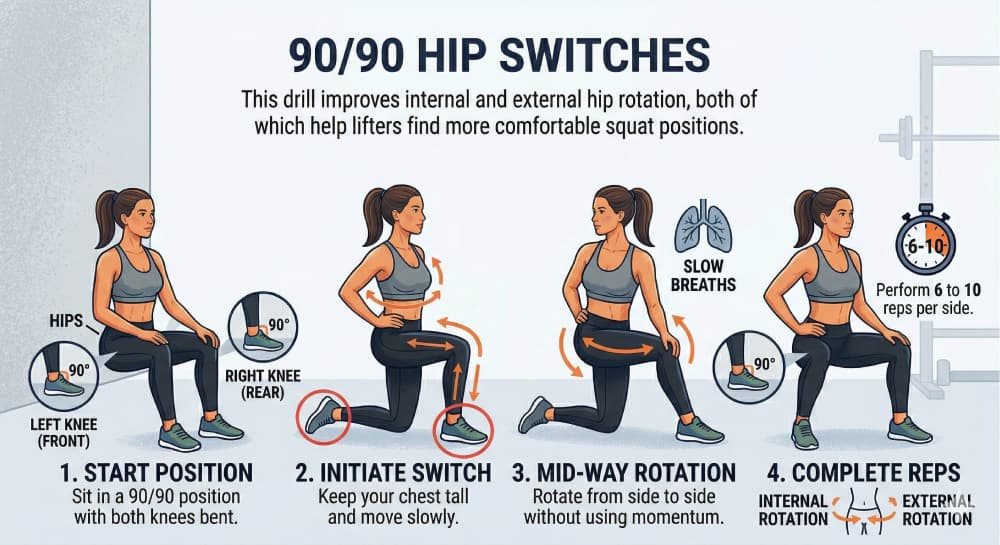
How to do it:
- Sit in a 90/90 position with both knees bent.
- Rotate from side to side without using momentum.
- Keep your chest tall and move slowly.
- Perform 6 to 10 reps per side.
Half-kneeling hip flexor stretch
This is one of the most useful flexibility exercises for lifters who sit a lot. It helps open the front of the hip and can improve how the pelvis moves during squats and split-stance work.
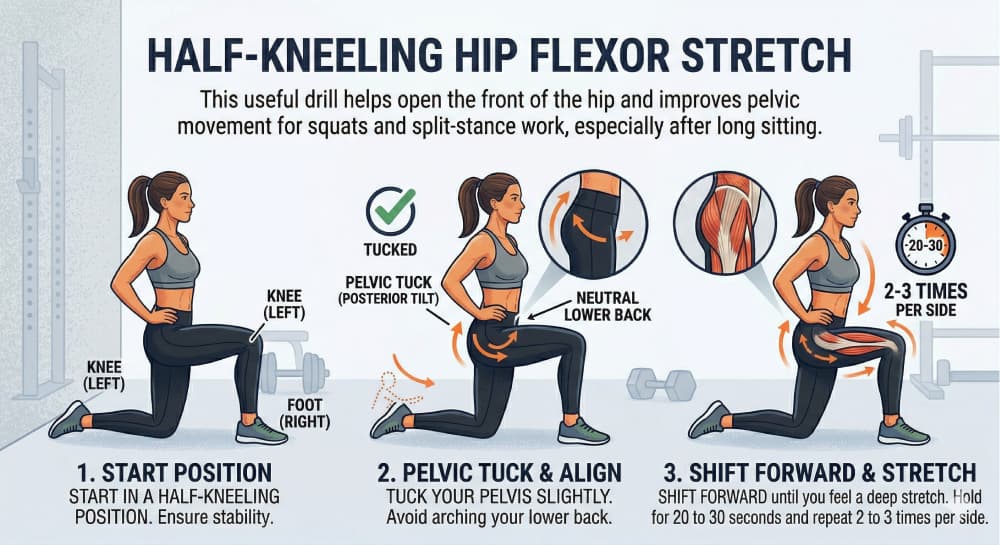
How to do it:
- Start in a half-kneeling position.
- Tuck your pelvis slightly instead of arching your lower back.
- Shift forward until you feel a stretch in the front of the hip.
- Hold for 20 to 30 seconds and repeat 2 to 3 times per side.
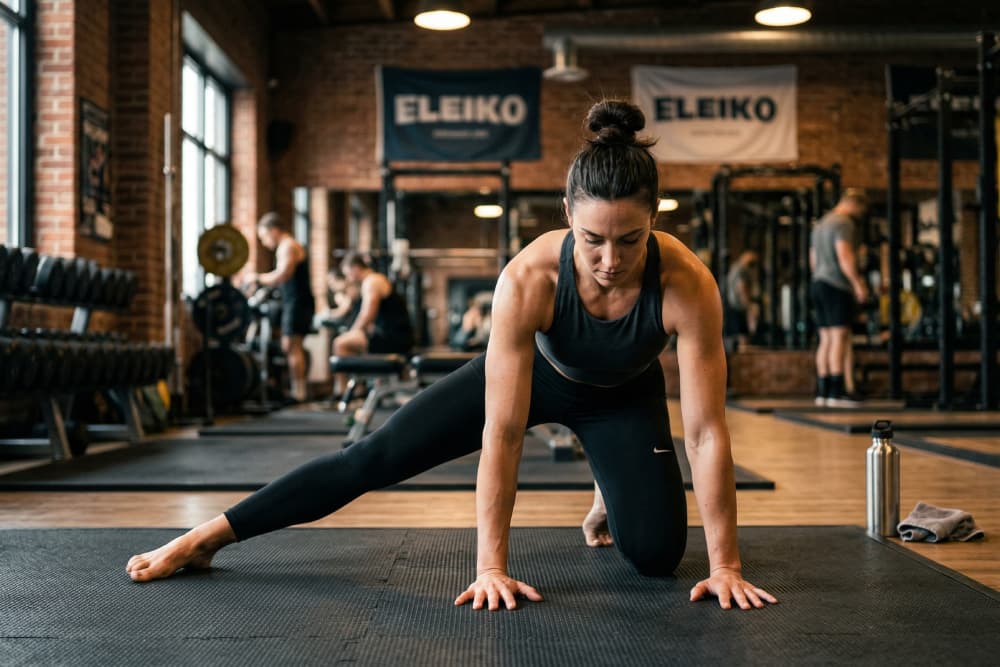
Adductor rock-backs
This drill targets the inner thigh and groin area, which often limit depth in wider squat stances.
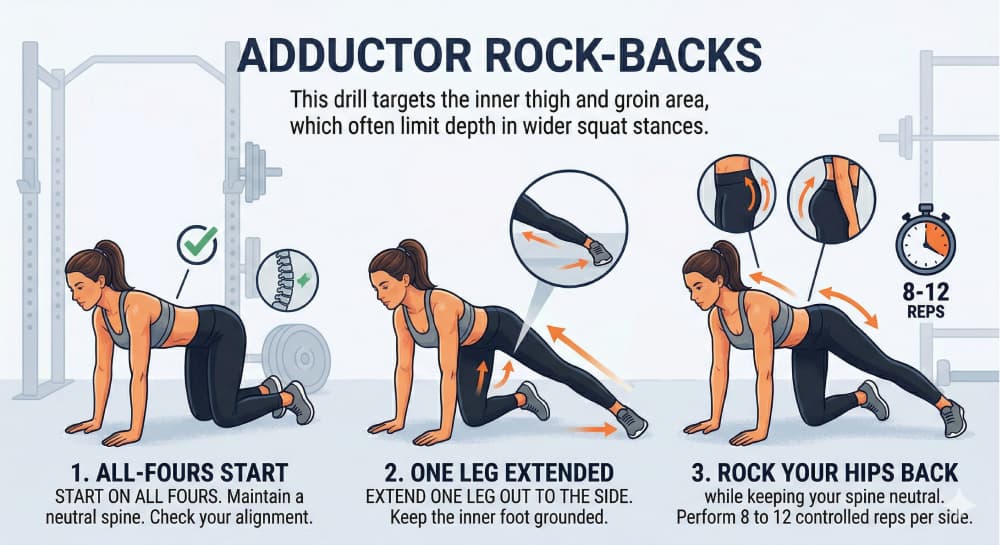
How to do it:
- Start on all fours.
- Extend one leg out to the side.
- Rock your hips back while keeping your spine neutral.
- Perform 8 to 12 controlled reps per side.
Deep squat pry
This drill helps you practice the bottom position of a squat with support and breathing.
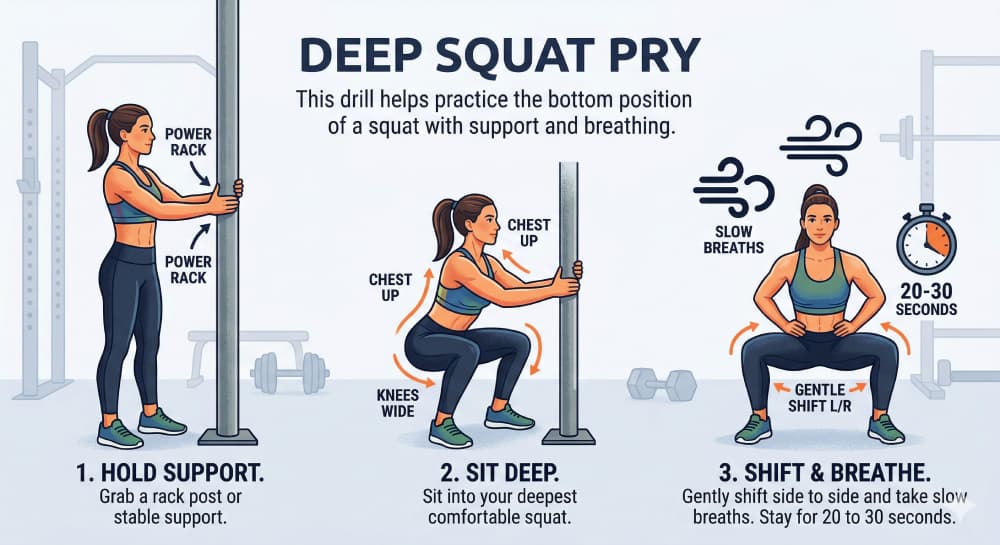
How to do it:
- Hold a rack post or stable support.
- Sit into your deepest comfortable squat.
- Gently shift side to side and take slow breaths.
- Stay for 20 to 30 seconds.
Do not force yourself into pain. The goal is to explore range, not jam the hips.
Ankle dorsiflexion rocks
This drill helps lifters keep their heels grounded and knees tracking forward during the squat exercise.
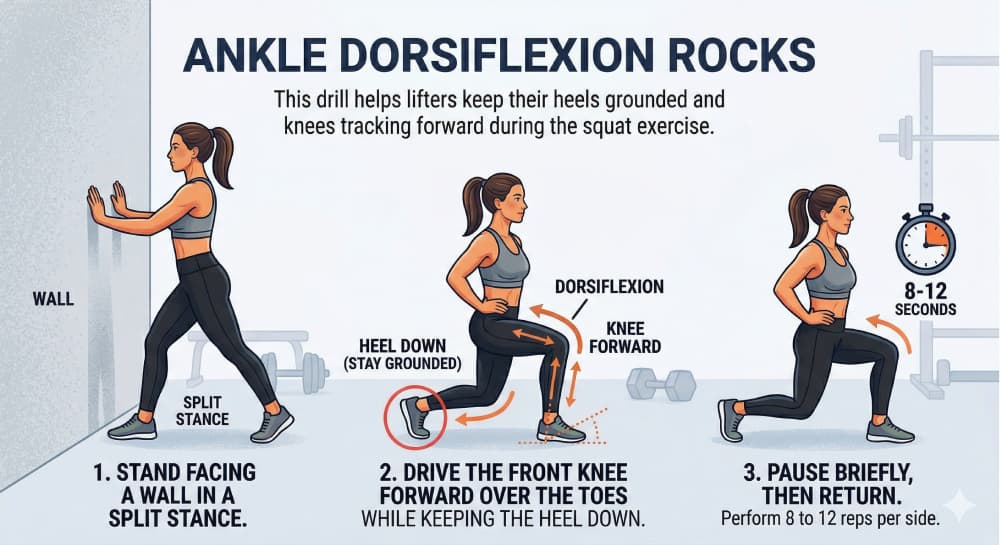
How to do it:
- Stand facing a wall in a split stance.
- Drive the front knee forward over the toes while keeping the heel down.
- Pause briefly, then return.
- Perform 8 to 12 reps per side.
How to Use Mobility Exercises Before and After Training
Use dynamic mobility before lifting and longer flexibility exercises after training. That approach usually works best for performance and consistency.
Before training:
- 5 to 8 minutes of targeted mobility
- focus on hips, ankles, and squat patterning
- use controlled reps, breathing, and position work
After training:
- 1 to 3 longer stretches for tight areas
- hold each stretch for around 20 to 30 seconds
- avoid bouncing or forcing range
A simple pre-squat sequence:
- Ankle dorsiflexion rocks
- 90/90 hip switches
- Adductor rock-backs
- Deep squat hold with breathing
- Bodyweight goblet squat practice
Comparison Table: Mobility vs Flexibility for Lifters
| Focus | Best for | Main benefit | Limitation |
|---|---|---|---|
| Mobility exercises | Lifters who want better squat positions and control | Improves usable range of motion and position ownership | Takes practice and consistency |
| Flexibility exercises | Lifters with obviously tight muscles after training or long sitting | Helps reduce stiffness and improves passive range | Does not automatically improve movement quality under load |
When You Need Coaching Instead of More Stretching
If your squat still feels painful, unstable, or inconsistent after regular mobility work, you may need coaching rather than more stretching. A good coach can help you adjust stance width, toe angle, breathing, bracing, heel elevation, and exercise selection based on your structure.
Reading about mobility is one thing; practicing it correctly is another. Our Deep Body Stretch classes and specialized equipment help you achieve mobility goals safely, guided by experts who understand functional anatomy. If you want hands-on guidance, explore the class schedule here: Deep Body Stretch classes.
FAQ
How often should lifters do mobility exercises?
Most lifters benefit from doing mobility exercises 4 to 6 times per week in short sessions. Even 5 to 10 focused minutes before lower-body training can make a noticeable difference over time.
Will mobility exercises instantly improve squat depth?
Sometimes you will feel an immediate improvement, especially if the restriction is mild and position-based. But lasting changes usually come from repeated practice, better control, and smart squat programming.
Are flexibility exercises enough for a better squat exercise?
No, flexibility exercises alone are usually not enough. They can help reduce stiffness, but lifters still need mobility, bracing, and squat-specific practice to use that new range well.
What if deep squats hurt my hips?
Stop forcing the position if you feel sharp pain, pinching, or pain that lingers after training. That is a good time to get an assessment from a qualified coach, physical therapist, or healthcare professional.
Summary
- Mobility exercises help lifters improve usable range of motion for better squats
- Hip mobility and ankle mobility are both key to deeper squat positions
- Flexibility exercises help, but control and positioning matter more for loaded lifting
- A short pre-lift mobility routine is often more effective than random stretching
- If your hips hurt or pinch, coaching and assessment matter more than forcing depth
Conclusion
Mobility exercises are not a side topic for lifters. They are a practical tool for unlocking deeper squats, cleaner movement, and healthier hips. If you want a better squat exercise, focus on controlled hip mobility, ankle function, smart warm-ups, and a stance that fits your body.
The biggest win is consistency. A few targeted drills done well several times a week will usually beat occasional marathon stretching sessions. Build mobility into your training, and your squat will start to feel less like a battle and more like a skill you can own.